Managing categories in helps you organize your posts and make them easier for your audience to find and filter. Whether you want to use the default categories provided by Beamer or create your own custom categories that better reflect your content, the process is straightforward and can be done directly from the post editing screen.
Custom categories allow you to tailor your post organization to your specific needs, and once created, they become available for future posts alongside the default options. This guide will walk you through adding a custom category to your posts, enabling multiple categories for even more flexible organization, and effectively managing your categories.
Adding default categories?
While creating or editing a post, select the Categories dropdown.
Select a category from the dropdown.
Click Save as a Draft or Save and Publish.
Adding custom categories
Available to Starter and above customers.
While creating or editing a post, select the Categories dropdown.
Select Create Custom Category.
Enter a category name and press Enter.
Click Save as a Draft or Save and Publish.
Adding multiple categories
Available to Scale and above customers.
Enable multiple categories
Select Settings > General > Categories & Segments.
Use the toggle switch to enable multiple categories.
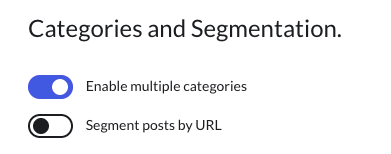
Click Save Settings.
Add multiple categories
After enabling multiple categories, create or edit a post.
Select the Categories dropdown and select a category. Repeat to add additional categories.
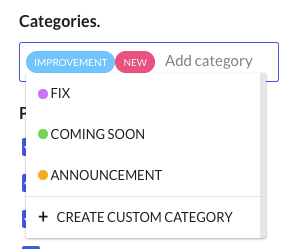
Click Save as a Draft or Save and Publish.
Managing your categories
Adding a category to a post is one part of it. Creating, renaming, reordering and deleting the categories themselves is done in one place.
Go to Settings > Categories & Statuses > Changelog categories. That is the list of your categories. The Settings > General > Categories & Segments screen is a different page, holding the multiple-categories and segment-by-URL toggles and your default segment filters, not the categories themselves.
Create a category
Enter the name under New category, give it a group if you use them, and click Add. You can set its colour from the list afterwards. Then assign it to posts from the post editor. You can also create one on the fly from the post editor's category dropdown.
Rename a category
Edit the name in the Changelog categories list. The new name applies to posts already filed under that category, so there is nothing to re-tag.
One exception. If you have set a custom display label for the category under Settings > Languages, that label is what your readers see, and renaming the category does not change it. Update it there as well.
Delete a category
Deleting a category never deletes the posts in it, and it does not leave them untagged either.
When you delete a category, Beamer asks you to pick a replacement from a dropdown of your other categories. Every post currently filed under the category you are deleting moves to the one you pick. There is no option to leave those posts without a category.
So decide where those posts should go before you delete. If you want them out of your changelog altogether rather than re-filed, archive or delete the posts themselves first. See Creating and managing Changelog posts.
Who can manage categories
Managing categories is part of editing your Changelog settings, so it follows your role's permissions in Settings > Team. If you can create and edit posts but cannot reach Settings > Categories & Statuses, ask an Administrator on your account to check your role. See How to assign roles and permissions?
Changing how a category name is displayed
If a category renders in a case you do not want, for example "AI" showing as "Ai", the display label can be edited separately. Go to Settings > Languages, scroll to the Categories section, and enter the label as you want it to appear in the Changelog filter. This needs to be enabled on your account. If you do not see the option, contact our support team.
Changing the categories on a post that’s already published is a silent change — it won’t re-notify users who have already seen the post.
Managing categories in helps you organize your posts and make them easier for your audience to find and filter. Whether you want to use the default categories provided by Beamer or create your own custom categories that better reflect your content, the process is straightforward and can be done directly from the post editing screen.
Custom categories allow you to tailor your post organization to your specific needs, and once created, they become available for future posts alongside the default options. This guide will walk you through adding a custom category to your posts, enabling multiple categories for even more flexible organization, and effectively managing your categories.
Adding default categories?
While creating or editing a post, select the Categories dropdown.
Select a category from the dropdown.
Click Save as a Draft or Save and Publish.
Adding custom categories
Available to Starter and above customers.
While creating or editing a post, select the Categories dropdown.
Select Create Custom Category.
Enter a category name and press Enter.
Click Save as a Draft or Save and Publish.
Adding multiple categories
Available to Scale and above customers.
Enable multiple categories
Select Settings > General > Categories & Segments.
Use the toggle switch to enable multiple categories.
Click Save Settings.
Add multiple categories
After enabling multiple categories, create or edit a post.
Select the Categories dropdown and select a category. Repeat to add additional categories.
Click Save as a Draft or Save and Publish.
Managing your categories
⚠️ Reviewer note — resolve before publishing
Still open: the reorder section is cut, and two controls on the Changelog categories screen are undocumented — the per-category eye icon in Actions, and the Group column. Decide whether we can describe them accurately or leave them out.
⚠️ Reviewer note — placement decision
The draft's publish note asks whether this content belongs in "Creating and managing Changelog posts" instead, which already has a "Customizing categories" section covering the display-label case. If it moves there, the "Changing how a category name is displayed" section at the end of this article is a duplicate and should be cut. Decide before this goes live.
Adding a category to a post is one part of it. Creating, renaming, reordering and deleting the categories themselves is done in one place.
Go to Settings > Categories & Statuses > Changelog categories. That is the list of your categories. The Settings > General > Categories & Segments screen is a different page, holding the multiple-categories and segment-by-URL toggles and your default segment filters, not the categories themselves.
Create a category
Enter the name under New category, give it a group if you use them, and click Add. You can set its colour from the list afterwards. Then assign it to posts from the post editor. You can also create one on the fly from the post editor's category dropdown.
Rename a category
Edit the name in the Changelog categories list. The new name applies to posts already filed under that category, so there is nothing to re-tag.
One exception. If you have set a custom display label for the category under Settings > Languages, that label is what your readers see, and renaming the category does not change it. Update it there as well.
Delete a category
Deleting a category never deletes the posts in it, and it does not leave them untagged either.
When you delete a category, Beamer asks you to pick a replacement from a dropdown of your other categories. Every post currently filed under the category you are deleting moves to the one you pick. There is no option to leave those posts without a category.
So decide where those posts should go before you delete. If you want them out of your changelog altogether rather than re-filed, archive or delete the posts themselves first. See Creating and managing Changelog posts.
Who can manage categories
Managing categories is part of editing your Changelog settings, so it follows your role's permissions in Settings > Team. If you can create and edit posts but cannot reach Settings > Categories & Statuses, ask an Administrator on your account to check your role. See How to assign roles and permissions?
Changing how a category name is displayed
If a category renders in a case you do not want, for example "AI" showing as "Ai", the display label can be edited separately. Go to Settings > Languages, scroll to the Categories section, and enter the label as you want it to appear in the Changelog filter. This needs to be enabled on your account. If you do not see the option, contact our support team.
Changing the categories on a post that’s already published is a silent change — it won’t re-notify users who have already seen the post.